IV vitamin therapy has become common in clinics and wellness centers. It is promoted for energy, immunity, skin or recovery after exercise. But what exactly is it, and how much scientific support does it have? Here is a summary based on medical sources.
What is IV vitamin therapy?
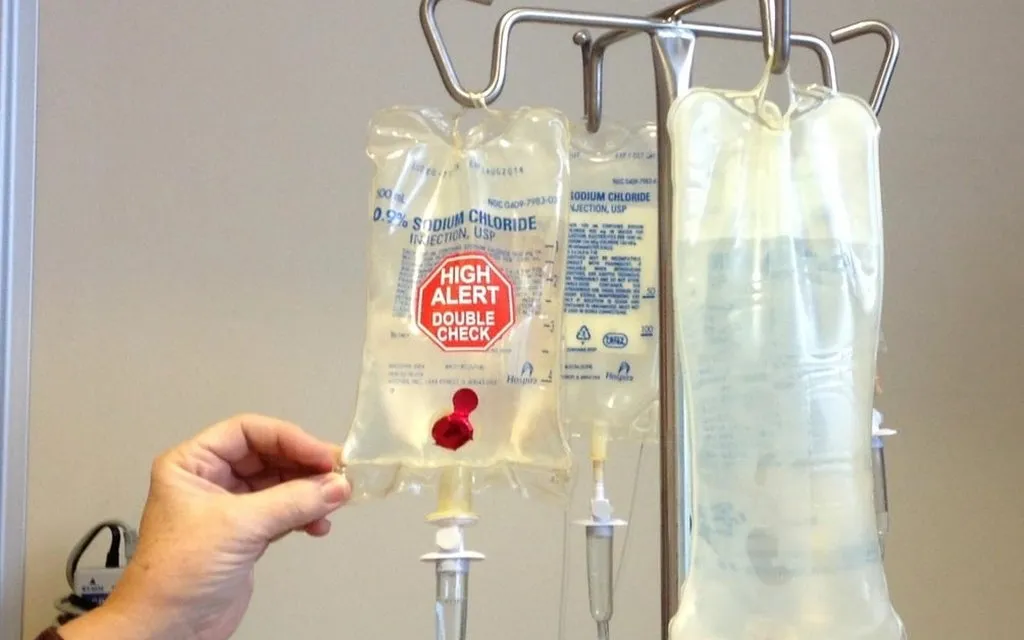
It delivers vitamins, minerals, amino acids, antioxidants or trace elements directly into a vein, diluted in a solution. Unlike pills, the nutrients bypass the digestive system, so they reach the blood at higher concentrations. Each session usually takes 20 to 60 minutes.
The best-known formula is the Myers’ cocktail, created in the 1970s: B vitamins, vitamin C, magnesium and calcium. Many variations exist today, such as drips with amino acids, antioxidants or trace elements like zinc, selenium, copper or manganese.
To learn about the most common components, see our guide to IV nutrient therapy.
When it has clear support
The intravenous route is an evidence-based treatment when there is a confirmed deficiency of a nutrient, or when a person cannot absorb it by mouth. For example:
- People who cannot eat or who have conditions that prevent nutrient absorption.
- Some cases of iron or vitamin B12 deficiency.
- Hospitalized patients who need fluids or electrolytes.
In these cases, the decision starts with a diagnosis and, usually, with lab tests.
What studies show in healthy people
Here the evidence is much more limited. The MSD Manual, a medical reference, notes that:
- Very few studies have tested the Myers’ cocktail or other formulas in people without deficiencies.
- Those that exist are small, lack a placebo group, or found no difference from placebo.
- There is no published evidence that it works for serious or chronic diseases.
One example: a 2009 pilot study included 34 adults with fibromyalgia. For 8 weeks, half received the Myers’ cocktail weekly and the other half received a drip without vitamins (placebo). Both groups improved, and there were no statistically significant differences between them. The authors attributed part of the result to the high placebo response and the small size of the study.
That is why the MSD Manual advises against using it in healthy people as a wellness routine, because its claimed benefits have not been confirmed.
Risks worth knowing
IV vitamin therapy is not risk-free, especially when it is not given by trained staff:
- Magnesium or potassium: in people with kidney disease, who take diuretics or who drink heavily, they can cause abnormal heart rhythms or muscle weakness.
- Fluid overload in people with heart conditions or high blood pressure.
- Low blood pressure and dizziness if the drip runs too fast.
- Allergic reactions: high IV doses of thiamine (vitamin B1) can cause anaphylaxis.
- Nerve damage with high doses of vitamin B6.
- Serious infections when equipment is not properly sterilized.
There are also drug interactions. For example, calcium should not be given together with the antibiotic ceftriaxone. Pregnant or breastfeeding women and people with kidney disease, high blood pressure or heart conditions should avoid it unless a physician advises it.
Questions to ask your doctor
- Do I have a confirmed deficiency? Do lab tests show it?
- What exactly is in the drip, and at what doses?
- Can I get these nutrients from food or by mouth?
- Are my medications or kidney function a concern?
- Who will give the drip, and under what hygiene conditions?
The bottom line
IV vitamin therapy is useful when it corrects a confirmed deficiency or when the oral route is not possible. As a wellness routine in healthy people, the available studies are few and small and do not confirm its benefits. If you are considering it, do so with a medical evaluation, a product from a reliable source and trained staff.
Are you a physician looking for product information? See how we work in stem cell distribution in Mexico. Questions as a patient? Contact us for more information.
- Shane-McWhorter L. Intravenous Vitamin Therapy (Myers' Cocktail). MSD Manual, Consumer Version. Full review July 2025.
- Ali A, Njike VY, Northrup V, et al. Intravenous micronutrient therapy (Myers' Cocktail) for fibromyalgia: a placebo-controlled pilot study. Journal of Alternative and Complementary Medicine. 2009;15(3):247-257.
This content is for informational purposes only and does not replace evaluation by a health professional. It has not been evaluated by the FDA.